
The Untapped Value of Sexing for Hatcheries
Many hatcheries operate without sexing chicks, determining the practice as unnecessary or not worth the investment. However, as the global industry continues to innovate and expand, hatcheries that introduce separate sex rearing strategies will keep both farms and processing plants profitable and competitive.
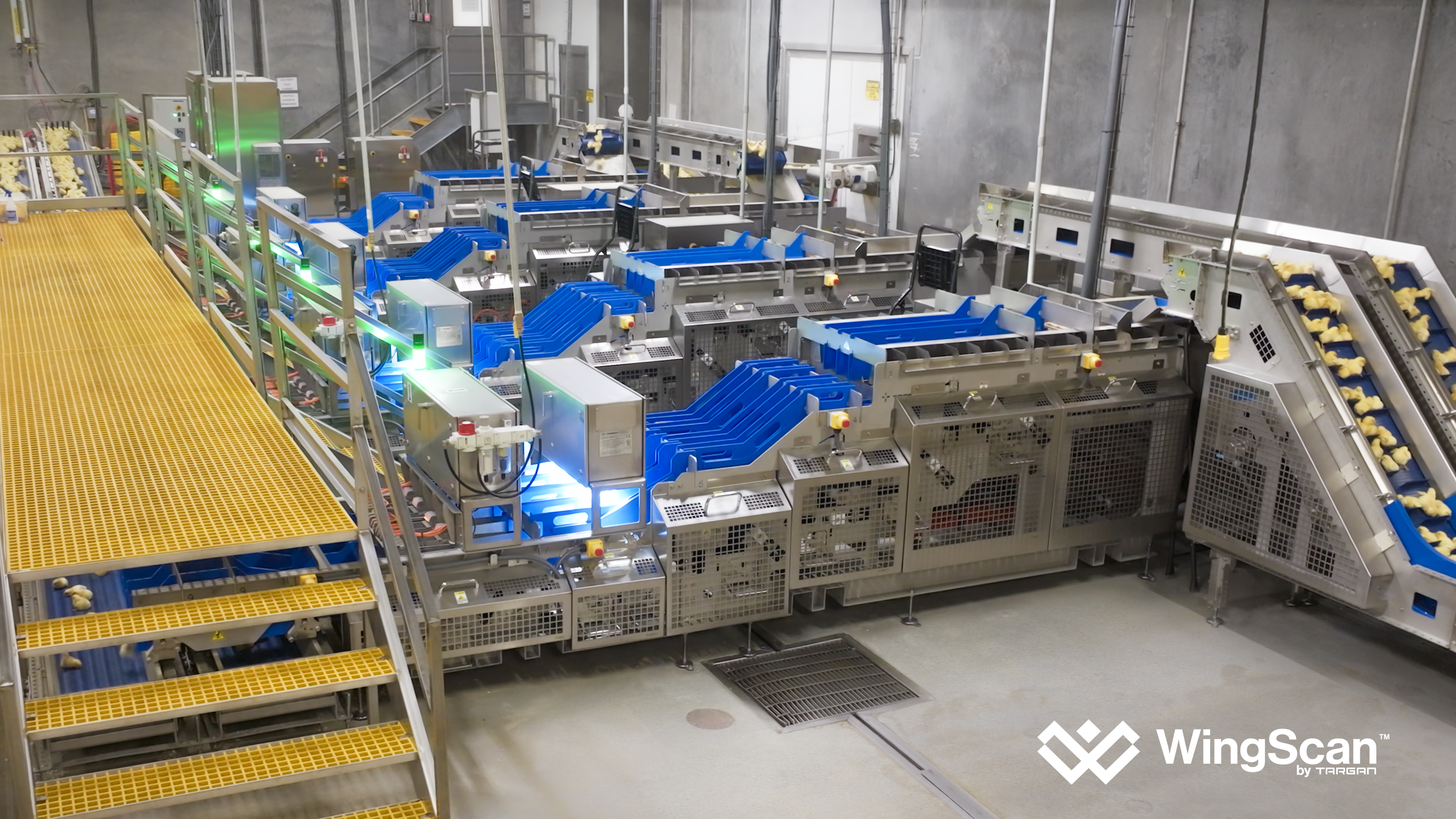
Rather than adopting manual sorting strategies, which can be time consuming, expensive and error prone, many hatcheries are making the jump straight to automated sexing solutions. These automated systems are plug-and-play, meaning feed efficiency, bird uniformity, and processing yields can be optimized from the get-go.
Why Consider Sexing?
For producers currently growing straight-run chicks, the potential for optimization is substantial. Raising male and female broilers together means nutritional programs, growth patterns, and stocking plans must serve both sexes—despite their biological differences. The result is often wasted feed, performance variability, and missed opportunities across the value chain.
By implementing sex-separate rearing, producers can:
✅ Tailor nutrition to each sex’s growth profile
✅ Improve uniformity and predictability of flock weights
✅ Reduce feed waste and improve conversion rates
✅ Optimize performance of automated systems at the processing plant
✅ Align more closely with customer specifications and market demands
Let’s explore how.
Better Feed Efficiency and Nutrition
In straight-run systems, one-size-fits-all feeding strategies struggle to match the needs of both sexes. Males typically require higher protein to support rapid growth, while females benefit from a more balanced energy-to-protein ratio. Feeding for the “average” bird often means neither sex is fully optimized.
Sexing enables targeted nutrition programs from day one, improving feed conversion and promoting better growth across the flock. Over time, this translates to stronger economic performance and more efficient use of feed—typically the highest input cost in broiler production.
More Uniform Flocks
Mixed-sex flocks often grow at different rates, creating wide variability in live weights that complicates day-to-day management and limits downstream efficiency. By contrast, sex-separate rearing enables tighter control of growth and better alignment with production goals. According to research by Petkov et al. (2020), broiler flocks raised by sex showed up to 30% less variation in carcass weights under the same environmental and nutritional conditions.
Here’s what more uniformity means in practice:
- Tighter weight bands at harvest help match birds to specific processing specs—minimizing product loss and rework.
- Improved stocking strategies with better control over feeder access, spacing, and ventilation tailored to each sex’s growth curve.
- More predictable scheduling from grow-out through transport and processing, reducing uncertainty across the supply chain.
- Higher consistency in yield and portioning at the plant—leading to better throughput and higher-value cuts.
Uniform flocks don’t just reduce operational friction—they give producers the predictability needed to run leaner, more profitable operations.
Higher Value Cuts and Yields
Uniformity doesn’t just make life easier on the farm—it’s essential for maximizing value at the processing plant. When flocks enter the slaughterhouse with a wide range of weights, it disrupts automated systems and creates inefficiencies across primary, secondary, and further processing. Uneven carcasses can lead to under- or over-processing, missed cut targets, and increased trim waste.
Sex-separate rearing helps solve this by producing more consistent bird sizes from the outset. With males and females growing at different rates, managing them separately allows producers to deliver birds that are closer to spec—and more reliably aligned with plant requirements.
The benefits of uniformity flow through the entire processing line:
- Primary processing runs more smoothly with predictable carcass size, improving scalding, evisceration, and chilling consistency.
- Secondary processing sees higher cut accuracy and fewer losses from trimming or misalignment – especially important safeguarding high-value cuts.
- Further processing—including breading, battering, and portioning—relies heavily on uniformity.
- Consistent sizing ensures even coating, optimized cooking times, and efficient packing.
Ultimately, sex-separate rearing gives producers the control needed to deliver more birds within customer spec, minimize waste, and unlock greater processing value.
Easier with Automation
Poultry producer often avoid sexing due to concerns over labor, training, and biosecurity. Manual sexing can be time-consuming, requires skilled workers, and adds bird handling that may compromise early chick performance.
That’s why many producers are skipping manual sexing entirely and adopting automation from the start.
Automated solutions like WingScan make sexing practical, scalable, and consistent. Using artificial intelligence and optical sensors, WingScan delivers 98%+ accuracy at speeds of up to 160,000 chicks per hour, depending on configuration. To date, the system has sexed over 1 billion birds globally, with more than 40 systems deployed worldwide.
The Reliable Solution for Hatcheries Ready to Advance
WingScan isn’t just a tool—it’s a strategic upgrade that allows hatcheries to align more closely with the demands of modern broiler production. With consistent accuracy, minimal footprint, and reliable field service support, it’s become the solution of choice for leading producers worldwide.
For hatcheries not yet sexing, the potential gains are clear—and with automation, the path forward has never been more accessible.
Contact us today to discover how WingScan™ can transform your operations.
Media Contacts:
Charlotte Baker
+44 (0)20 8647 4467
charlotte.baker@garnettkeeler.com
Carlos Bautista
Carlos.bautista@targan.com