
How Early Broiler Sexing is Changing the Game at All Levels of Production
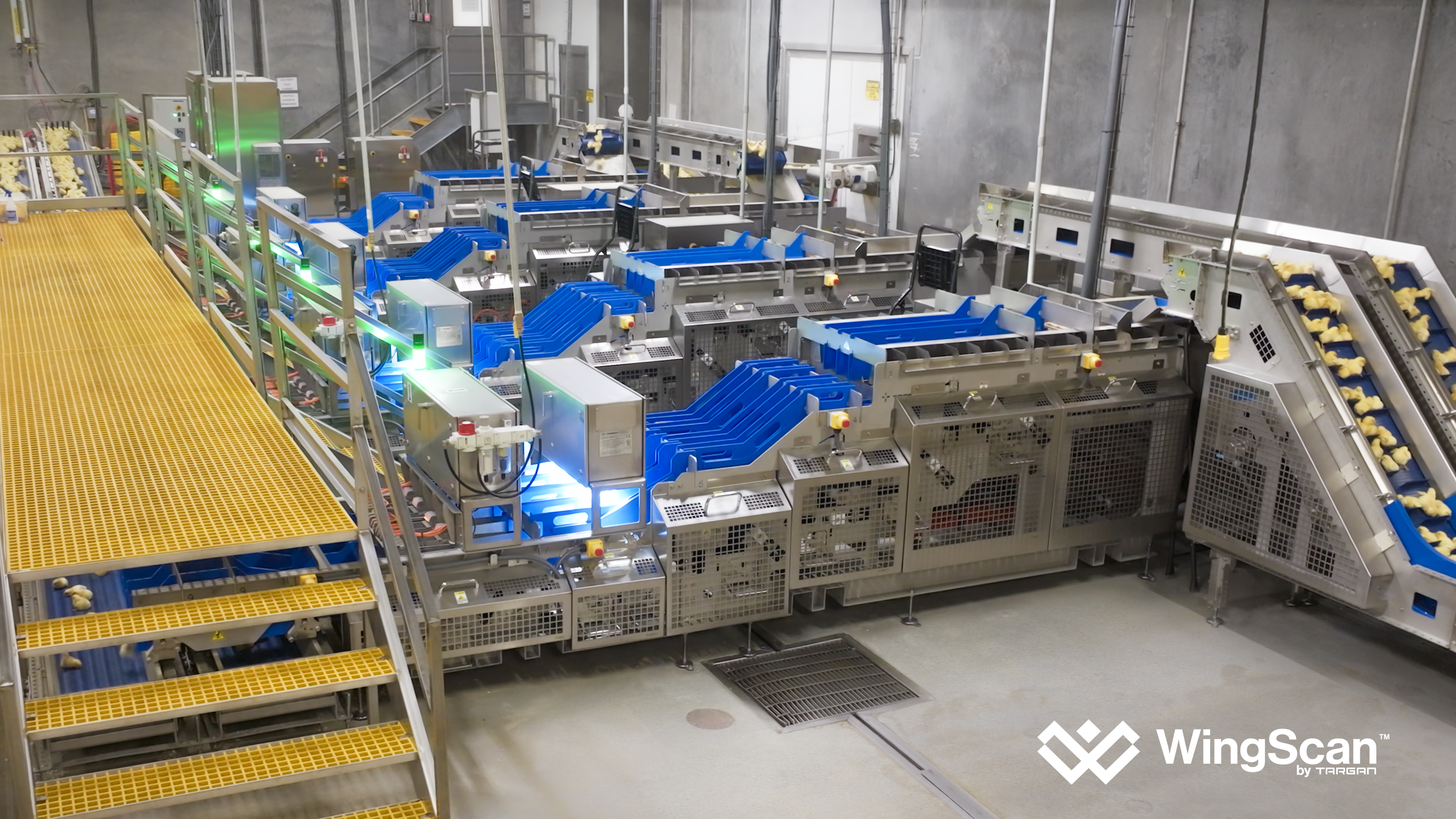
Many hatcheries still send mixed-sex flocks to farms without considering the downstream impacts, but the reality is, decisions made at the hatchery can significantly shape outcomes at the farm and plant.
With the introduction of AI-powered automated sexing systems like WingScan™, producers now have a chance to not just optimize hatchery throughput, but drive real, measurable improvements in flock performance, welfare, and profitability.
Here’s why early chick sexing matters more than ever on the farm...
Feeding the Right Way from Day One
Chicks don’t just look different, they grow different.
Males and females have unique growth patterns, nutritional requirements, and feed conversion ratios (FCR), but in mixed-sex flocks, you’re feeding to the average. That means overfeeding some birds, underfeeding others, which is not the most efficient use of resources.
With sexed chicks, producers can implement gender-specific feeding programs that optimize diets for each group. The result?
✅ Better weight gain
✅ Lower feed costs
✅ Improved flock uniformity
This isn’t theoretical either, there is real-world data already illustrating the benefits of implementing automated feather-sexing. Hatcheries using WingScan are seeing more uniform weight categories and stronger FCRs at the farm level, helping producers tighten margins and improve efficiency.
Fast Track to Feed and Water
Time matters. The quicker day-old chicks can get to the farm, the better their start.
Whilst traditional manual sexing can create bottlenecks, extending holding times and delaying access to feed and hydration, automated sexing addresses these delays. This means:
🚛 Chicks hit the road sooner
💧 Access feed and water faster
🌱 Kickstart growth
Getting chicks off to a stronger start has directly shown to improve welfare as it reduces early mortality, stress, and supports more consistent development across the flock.
More Predictable Growth Cycles
As mixed-sex flocks create unpredictability in the weight distribution, farmers can be impacted by a disparity in growth performance.
With sex-separated flocks, growth patterns are more uniform, making it easier to:
📅 Plan feed deliveries
📦 Schedule processing
📍 Manage space and flock rotation
When flocks are growing at the same pace, it’s easier to make confident decisions, reduce variation, and maximize returns.
Figure 1 below shows the difference in weight distribution between straight-run and sexed flocks, both grown to the same target weight of 6 lbs. The sexed flocks show 24% more birds within the target range (±10%). In comparison, Figure 2 shows the weight distribution of straight-run birds, with greater weight disparity between males and females, and average weights of both sexes falling further from the target weight.
Figure 1: Straight-Run vs. Sexed Bird Weight Distribution
Figure 2: Weight Distribution of Straight-Run Birds
Lower Stress and Improved Welfare
Since mixed flocks must also compete for food, space, and comfort, there is an added layer of stress that can increase mortality rates and compromise welfare, especially for female chicks who are smaller on average.
Sexing birds early allows you to:
✅ Separate faster-growing males from more feed-efficient females
✅ Tailor your stocking density
✅ Reduce stress and mortality (competition for resources)
Less stress equals better health, more stable growth, and happier birds, an overall win across the board.
Uniformity = Profit
Mixed-sex broiler flocks often result in wide variations in growth rates and final body weights. This inconsistency complicates on-farm management—creating challenges with stocking density, feeder access, and ventilation—and limits the producer’s ability to meet tight processing specifications.
By contrast, sex-separate rearing allows producers to manage male and female birds according to their distinct growth curves and nutritional requirements. Tailored feeding programs, reduced competition, and uniform behavioral patterns result in tighter weight distributions and improved flock performance.
In a 2020 study by Petkov et al., published in the Bulgarian Journal of Agricultural Science, researchers compared sex-separate and mixed-sex rearing of broilers under identical conditions. The results showed that sex-separate flocks achieved significantly higher final live weights, improved feed conversion, and up to 30% less variability in carcass weights at market age. These improvements translated to better predictability and more consistent alignment with processing plant requirements.
Greater flock uniformity enables more accurate planning for harvest dates, transportation, and cut-up schedules. For producers looking to improve consistency and reduce inefficiencies from the hatchery to the processing line, sex-separate rearing offers a measurable advantage.
Ready to Skip the Manual Stage?
If your hatchery isn’t sexing yet, the idea of adding that step might feel like adding complexity, especially if you go down the manual sorting route. But with automated solutions, it’s quite the opposite.
WingScan is plug-and-play, compact, scalable, and designed to integrate with your existing setup. With consistent accuracy of and above 98% and speeds of up to 160,000 chicks per hour, it’s the fastest path to better performance from hatch to harvest.
By making the switch to gender-specific rearing strategies, you’re not just improving your hatchery. You’re setting your farmers (and your birds) up for long-term success.
Interested in Learning More?
Reach out today to see how WingScan™ can transform your operations.
Email us at info@targan.com
Media Contacts:
Charlotte Baker
+44 (0)20 8647 4467
charlotte.baker@garnettkeeler.com
Carlos Bautista
Carlos.bautista@targan.com